Why Is My Skylight Leaking? Causes and Fixes in Melbourne


A leaking skylight causes water damage, staining and mould risk, and it usually gets worse if ignored. Whether you've noticed a drip after heavy rain or a mysterious damp patch on your ceiling, the cause is usually one of five things. This guide explains what they are, which ones you can address yourself, and when to call a qualified tradesman.
The 5 Most Common Reasons a Skylight Leaks
1. Failed or lifting flashing the #1 cause
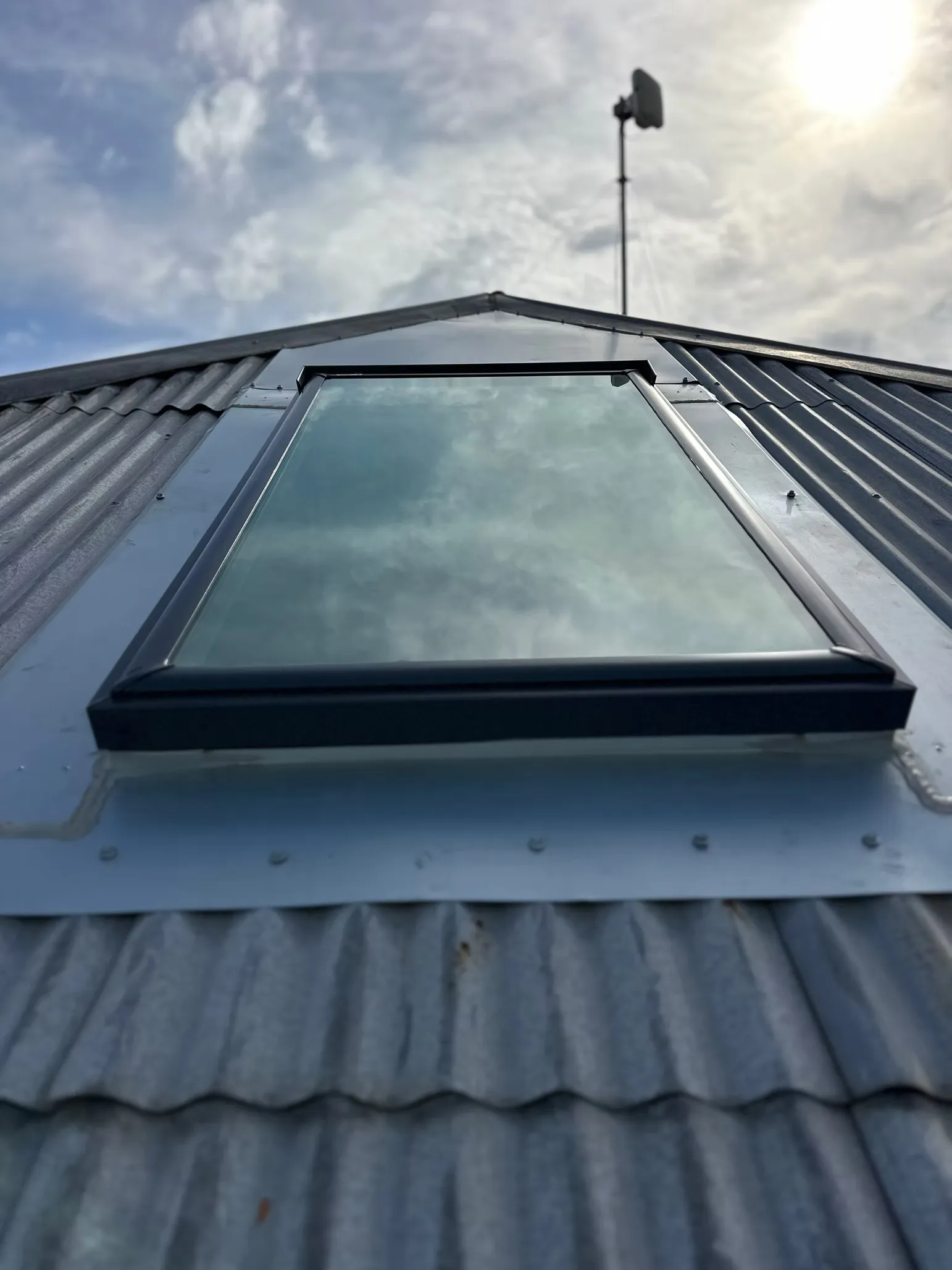
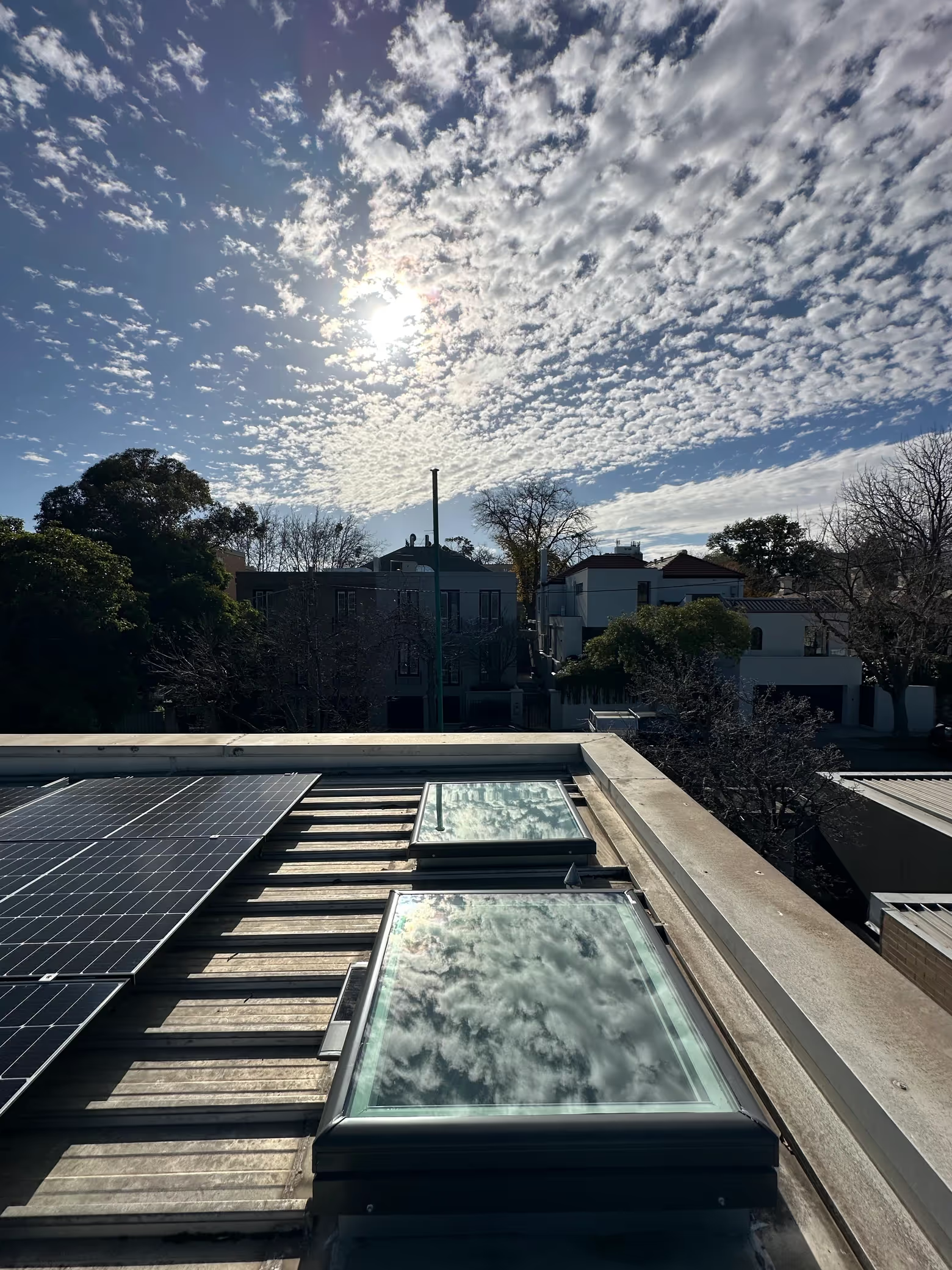
Flashing is the metal seal that sits between your skylight frame and the surrounding roof material. Over time, especially on Melbourne roofs that endure hot summers, cold winters, and everything in between, flashing can lift, crack, corrode, or pull away from the frame. When it does, water finds its way in along the edge of the skylight rather than through the glass itself.
Failed flashing is the single most common cause of skylight leaks we see on Melbourne roofs. It's rarely a sign of a faulty skylight; it's usually a sign of an installation that wasn't done properly in the first place or simply age. A properly installed Velux flashing kit, correctly fitted to your specific roof type, eliminates this entirely.
2. Degraded rubber seal around the frame
The rubber gasket that runs around the perimeter of the skylight glass compresses over time and loses its ability to form a watertight seal. UV exposure accelerates this on skylights facing north or west. Once the seal starts to degrade, water can enter around the glass edge rather than through a structural failure in the roof.
This is more common in skylights over 10–15 years old. The fix is either a seal replacement (if the frame is otherwise sound) or full unit replacement if the frame itself has also deteriorated.
3. Cracked or broken glazing
Impact damage from hail, a fallen branch, or a roofing accident can crack the glass or acrylic dome of a skylight. Even a hairline crack is enough to allow water ingress, particularly during heavy Melbourne rain, when water pressure builds up on a flat or low-pitch surface.
If the frame is undamaged, glazing replacement alone is often sufficient. If the unit is older and cracked domes are common on that model, it's worth considering a full Velux replacement to future-proof the installation.
4. Blocked drainage channels or debris buildup
Many skylights, particularly on low-pitch or flat roofs, have small drainage channels or weep holes designed to channel water away from the frame. Leaves, dirt, moss, and debris can block these channels and cause water to pool and eventually back up under the flashing or around the frame.
This is one of the few causes a homeowner can address themselves; clearing debris from around the skylight and its drainage points is a legitimate DIY maintenance task. It's worth doing annually, particularly after autumn.
5. Condensation is not a leak, but looks like one
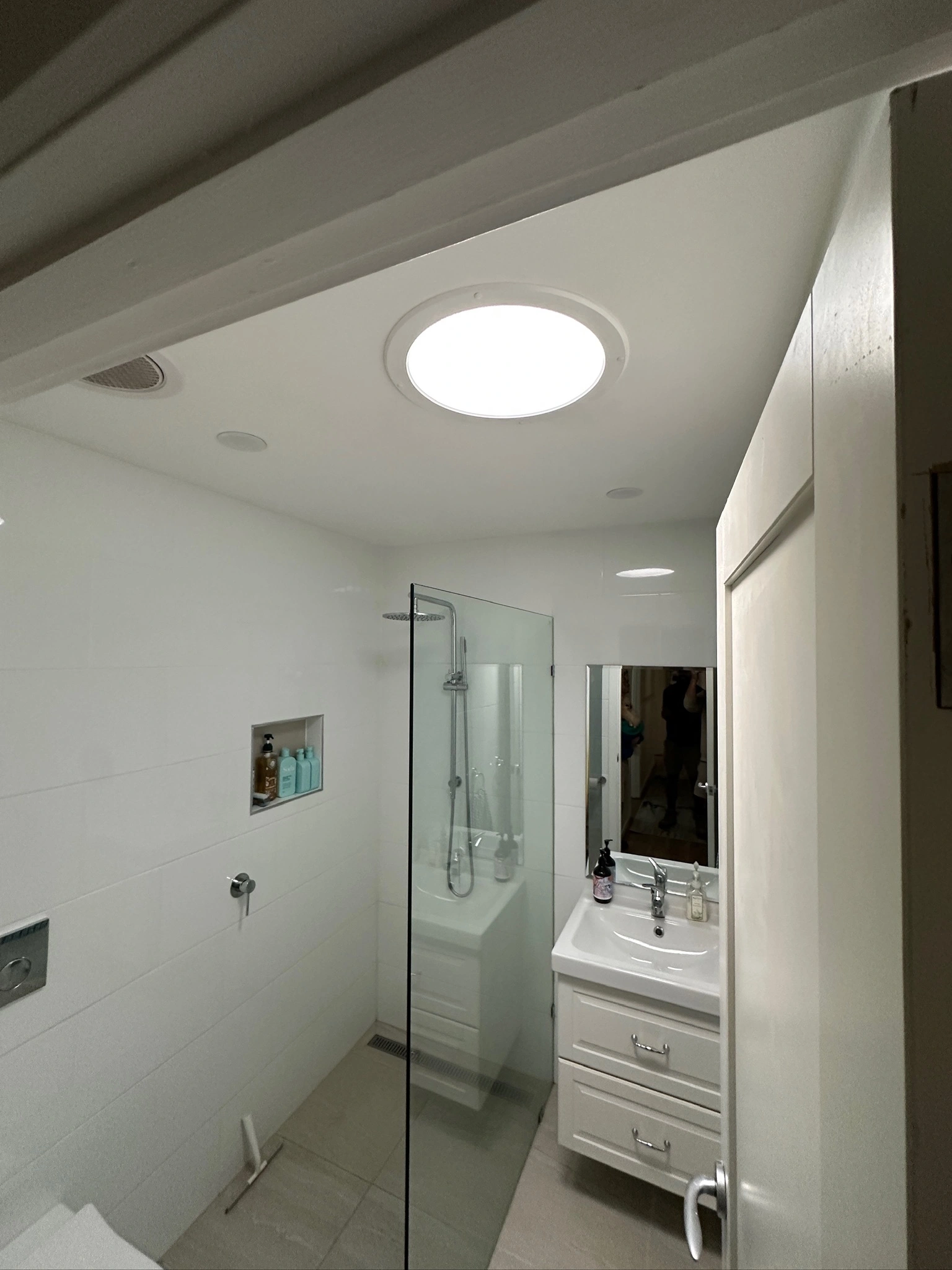
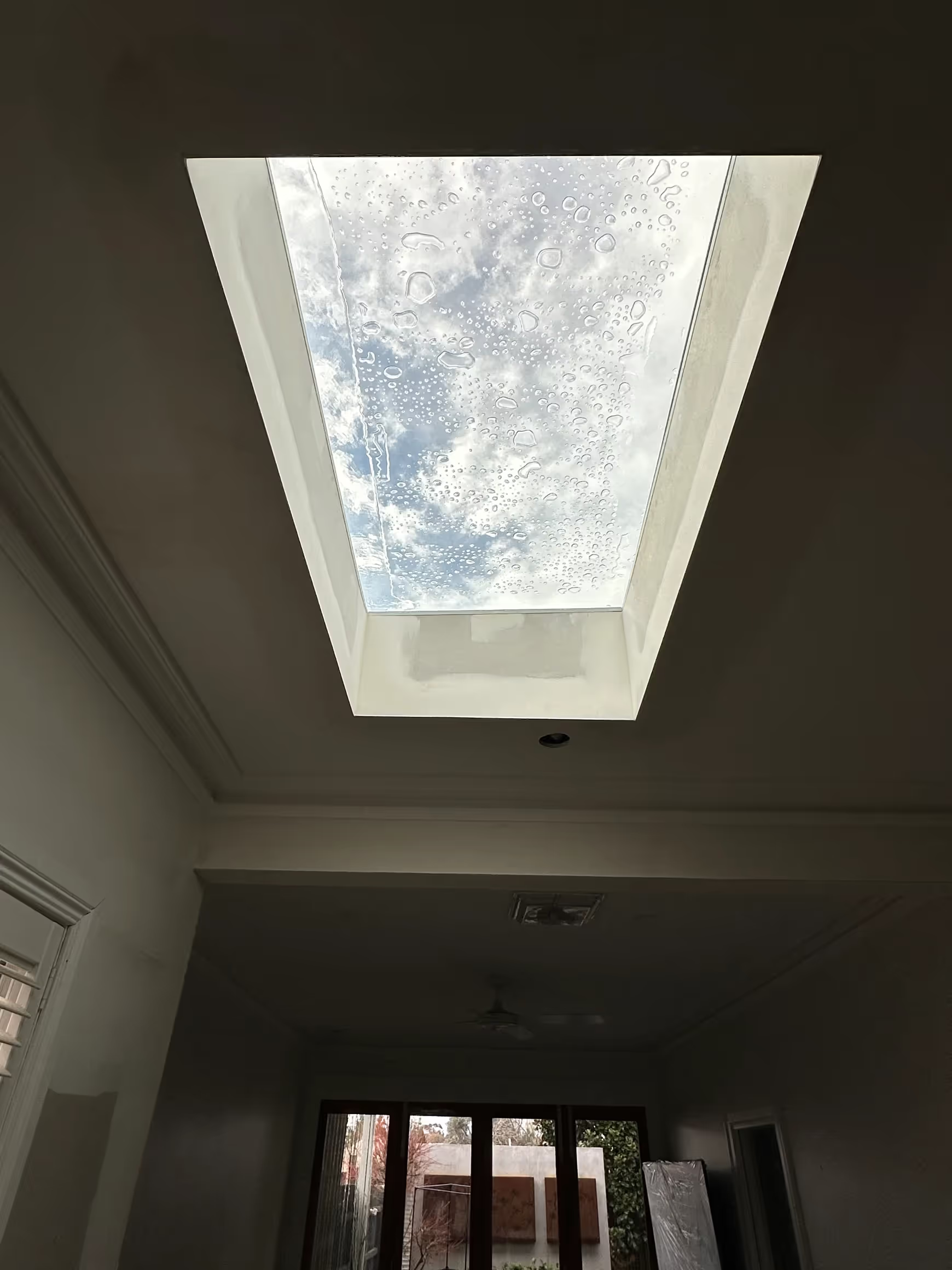
Condensation forms when warm, humid interior air meets a cold glass surface. In bathrooms, kitchens, and laundries, the most common rooms for skylight installation, moisture levels are high enough to produce visible water droplets on the inside of the glass. This is often mistaken for a leak.
The key diagnostic: if the moisture appears on the interior glass surface and clears when the room warms up or ventilates, it's condensation. If water is dripping from the frame, running down the shaft, or appearing after rain, it's a genuine leak. The fix for condensation is improving ventilation or upgrading to a double-glazed unit, not calling a roofer.
Can You Fix a Leaking Skylight Yourself?
Some maintenance tasks are perfectly safe for a homeowner to do. Others require a qualified tradesman, both for safety and to avoid making the problem worse.
What's safe to attempt cleaning and clearing debris
If you can safely access your roof:
• Clear leaves, moss, and debris from around the skylight frame and any drainage points
• Clean the glass exterior with water; avoid abrasive cleaners
• Check that drainage weep holes are clear and unblocked
• Note whether the water appears inside the glass (condensation) or from the frame (leak)
If you're not comfortable working at height, don't attempt roof access. A fall from a single-storey roof is life-changing. Call a professional instead.
What needs a qualified tradesman flashing, glazing, structural work
The following require a licensed tradesman:
• Reflashing or replacing flashing: incorrect flashing creates new leak paths
• Replacing cracked or broken glazing
• Resealing the frame requires correct product selection for your roof type
• Full skylight replacement, structural opening, new flashing, plastering
• Any repair on a tiled roof: incorrect tile handling causes more leaks
Attempting a DIY reseal with silicone or roof cement is one of the most common causes of repeat leaks we see. It masks the symptom without addressing the cause, often makes the eventual proper repair harder, and can void product warranties.
How Much Does Skylight Leak Repair Cost in Melbourne?
Repair costs vary depending on what's failed and how accessible your roof is. As a general guide:
• Debris clearing and minor maintenance: DIY or included in a service callout
• Flashing repair or reflashing: typically AU$300–AU$700 depending on roof type and extent
• Seal or glazing replacement: AU$250–AU$600 depending on unit size and access
• Full skylight replacement: from AU$2,300 for a standard Velux unit, fully installed
These are indicative ranges; actual costs depend on your specific roof and what's failed. We always provide a free on-site assessment before quoting.
Repair or Replace? How to Decide
Age of skylight, extent of damage, and cost comparison
A useful rule of thumb: if the repair cost is more than 50% of the replacement cost, and the skylight is over 15 years old, replacement is usually the smarter investment.
Consider repair when:
• The skylight is less than 10 years old and the frame is structurally sound
• The failure is isolated flashing only, or glazing only, not multiple components
• The repair cost is well below half the cost of a new unit
Consider full replacement when:
• The skylight is 15+ years old and has leaked repeatedly
• The frame has warped, corroded, or suffered structural damage
• It's an older single-glazed unit; upgrading to a double-glazed Velux also improves energy efficiency and condensation control
• Multiple components have failed or the repair would cost more than half the replacement price
If you're unsure which situation applies, a free on-site assessment will give you a clear recommendation, not a guess.
How Luminous Skylights Fixes Leaking Skylights
We diagnose the actual cause first, not just the symptom. Whether the fix is reflashing, a new seal, or a full Velux replacement, we handle everything in-house: roof work, carpentry, and plastering. No subcontractors, no coming back twice.
Read next
More from our guides